How to adopt a pet in Singapore
By PetBuddy.sg TeamPublished 29 September 2026
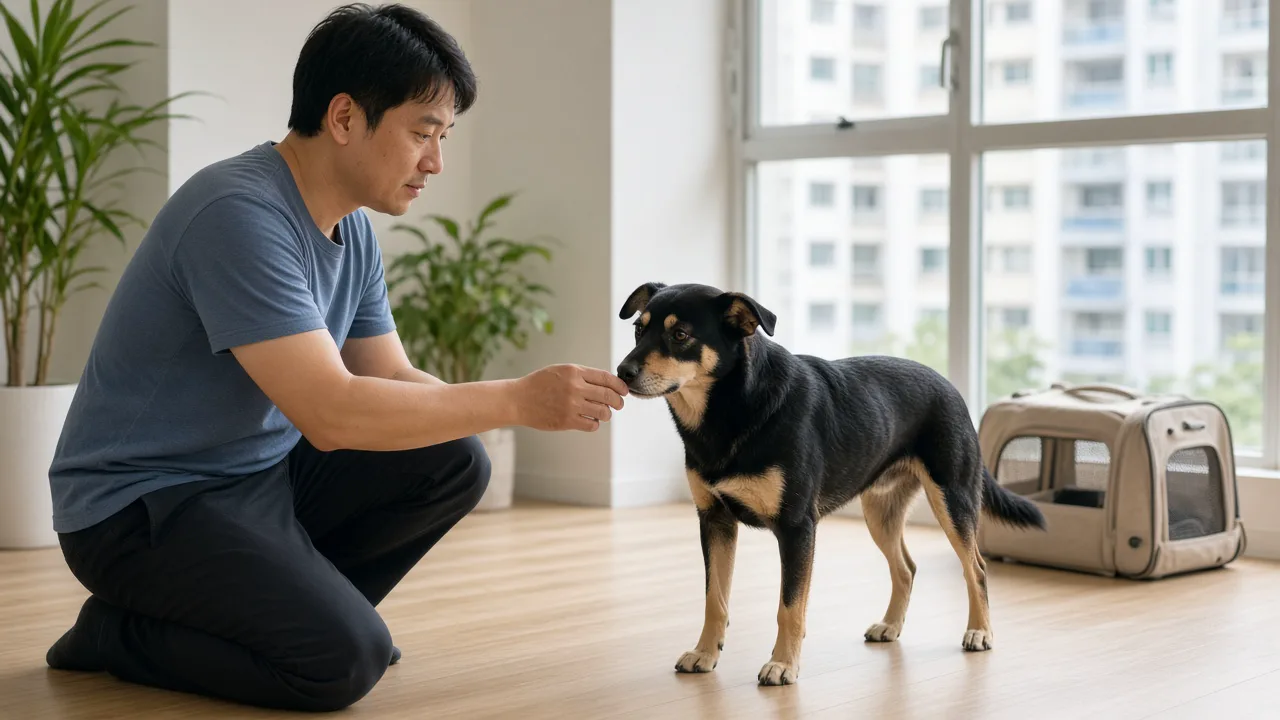
Brought an adopted pet home?
Adopting a dog in Singapore is usually a better start than buying one, and the same path works for cats, rabbits and hamsters. A welfare group has already treated the animal and lived with it. You still have to be sure your home can keep it, and you still have to tell a real shelter from a listing that only wants a transfer.
This page is a practical guide for someone who wants a pet. It is not a directory of every group. Partner lists and adoption rules change, and PetBuddy does not run a shelter. Confirm the current process on the group’s own site. When you want names, use the charities guide linked below.
Check whether the home can keep the animal
Housing rules come before any application. An adoption agreement is not permission from HDB, a town council or a condo management to keep the animal at your address.
- HDB flats: up to one dog of an approved small breed, and up to two cats. Specified dog breeds are not allowed in HDB.
- Local mixed-breed dogs, including Singapore Specials, can be rehomed into an HDB flat through Project ADORE and its listed welfare partners. The scheme allows one dog in the flat, up to 55 cm at the shoulder. The dog must be licensed, microchipped, vaccinated and sterilised, and the adopter completes obedience training.
- Private homes: typically up to three cats and dogs combined. The estate’s own rules still apply.
- Rabbits and hamsters are not covered by the dog-and-cat licence. A flat or condo can still refuse them, so ask the estate before you apply.
After you adopt a dog or cat you still need an AVS licence on PALS. First-time applicants finish the free online Pet Ownership Course before they can submit. Fees, microchipping and the documents to upload are in dog and cat licences in Singapore.
Start with a legitimate shelter
Begin with an animal welfare group on the AVS list of Partner Animal Groups. AVS says animals from these groups are usually sterilised and screened for behaviour before they are matched. When the group charges an adoption fee, that money goes towards sterilisation, deworming, vaccination and the cost of running the adoption. It is a programme cost, and it is not itself a scam.
Dogs are the widest choice: street dogs and Singapore Specials, plus animals surrendered by owners. Cats, rabbits and hamsters have their own partner groups. A short sample of who does what is in Pet charities in Singapore. Treat the AVS list as the source of truth when a name or website moves. The guidelines for dog rehoming and adoption are the official best-practice note if you want the longer version.
Expect a process. Groups ask about your home, other pets, work hours and who will care for the animal if you travel. Many want a meet-and-greet, and some visit the home. A waiting list is normal when foster places are full. That is a capacity limit.
Social media is a second look
Facebook groups and Instagram accounts are where many Singapore rescues and fosterers post animals that are ready for a home. Owner-to-owner rehoming shows up there too. AVS tells owners who can no longer keep a pet that a social-media post is one way to look for an adopter. Reading those posts can show you what is available this month.
Use them after you know which shelters are on the partner list. PetBuddy does not name a group here. Membership and moderation change, and a community is not an endorsement. Search Facebook or Instagram for Singapore adoption or rehoming groups, then read recent posts rather than one polished album.
- Meet the animal in person before you pay anything. A video call is a weak substitute for a dog or cat you will live with.
- Match the poster to an AVS partner group, or to a household you can actually visit. A page that only exists as a new profile is not a shelter.
- Ask what is already done: sterilisation, vaccination, microchip, and any medical history you will inherit.
- Leave if the person will not let you visit, rushes the handover, or will only talk about payment.
When a request for money is a scam
Asking for money is not itself the warning. A real shelter often charges an adoption fee, and it explains that fee before you commit. Pay it after you have met the animal, through the method the group’s own site describes. The problem is the way a stranger asks.
- Payment before you have met the animal, including a reservation or delivery fee to someone you have not visited.
- A personal PayNow or bank transfer to a stranger, rather than the payment route on the welfare group’s own site.
- A pet advertised as free that later needs a shipping, quarantine or vaccination fee before you can see it.
- Stock photos, or the same animal posted under different names and locations.
- Pressure to pay today, or a claim to be a shelter that does not appear on the AVS partner list.
If the listing fails those checks, stop. Report it on the platform and go back to a partner group. A legitimate group will still have animals next week.
After the animal comes home
Adoption papers do not replace a licence. Apply on PALS for a dog or cat and upload the adoption or fosterer agreement. Book a first vet visit so the clinic has its own record, even when the group has already vaccinated and sterilised the animal. The first vet appointment checklist is the practical list. Read vet costs in Singapore before you assume adoption means no further bills.
Keep the group’s contact. Many want an update if the match is not working, and they would rather help you troubleshoot than hear that the animal was passed on informally.
Sources
Brought an adopted pet home?