Do I need a licence for my dog or cat in Singapore?
By PetBuddy.sg TeamPublished 18 September 2026
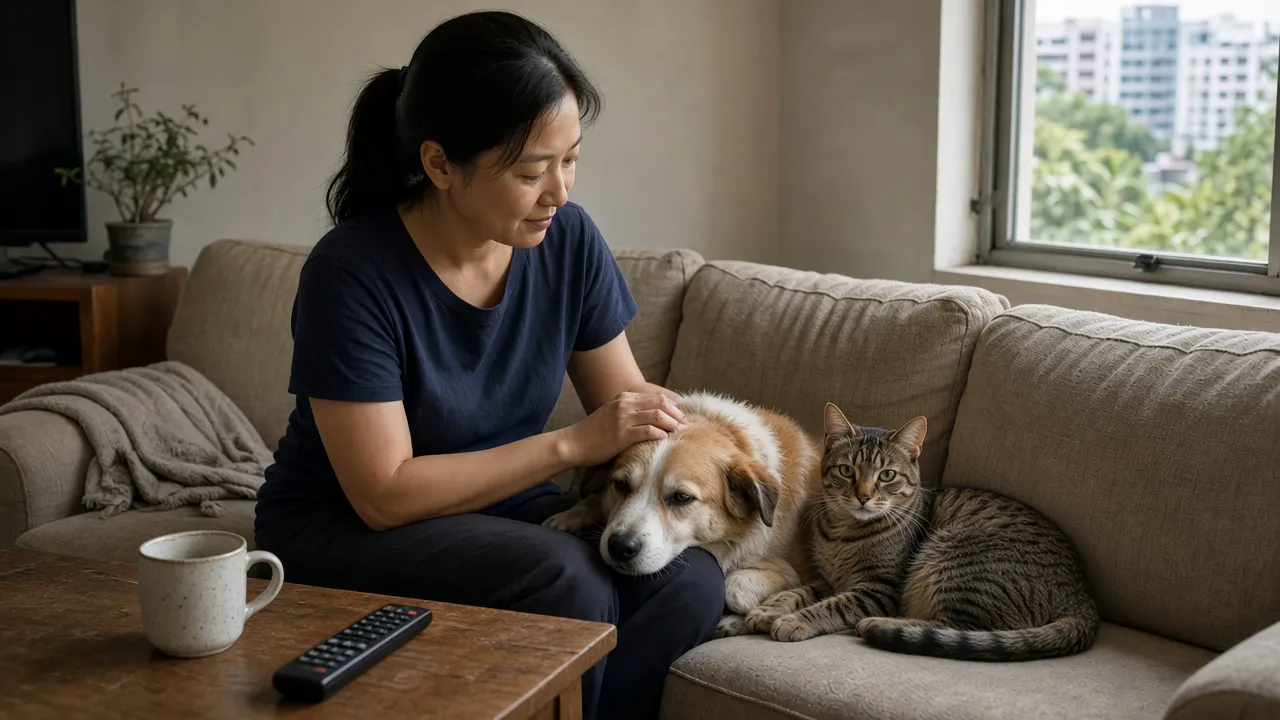
Need a microchip or sterilisation certificate before you apply?
Yes. If you keep a pet dog or a pet cat in Singapore, you need an Animal and Veterinary Service (AVS) licence for that animal. The same rule covers a puppy or kitten, a mixed breed, a pedigree, and a pet you adopted. Cats are not exempt: the two-year Cat Management Framework transition ended on 31 August 2026, and keeping an unlicensed pet cat is now an offence.
This page is a practical overview of owner licences, not legal advice. Fees and conditions change. Confirm the live figures and forms on the AVS licensing pages before you pay. An owner licence is also not the same thing as an AVS boarding-facility licence.
Why AVS requires a licence
AVS licenses cats and dogs so each animal can be traced if a disease outbreak occurs, including rabies. The licence is tied to a microchip. If AVS needs to examine pets in your area, the licensee is expected to produce the animal. The same record helps return a lost pet, because the chip number on a scanner should match a current owner on the Pet Animal Licensing System (PALS).
Sterilisation is not mandatory, but AVS prices licences to favour it. A sterilised pet can take a cheap one-time licence that lasts for life. An unsterilised pet pays more and must renew. That is a public-health and population-control choice, not a clinic upsell.
What a licence does not cover
An AVS licence is permission to keep that cat or dog as a licensed pet. It is not permission from HDB, a town council or a condo management to keep the animal at your address. You still have to stay within housing rules. AVS states that the licence is not an approval to keep the pet at the premises you list on the application.
- HDB flats: up to two cats and one dog of an HDB-approved small breed, under the Housing and Development (Animals) Rules 2024. Specified dog breeds are not allowed in HDB.
- Private homes: typically up to three cats, three dogs, or a mix that adds up to three. Only one Specified dog is allowed in a private premises, with older licensed exceptions. Keeping more than three licensed pets in a private home needs prior AVS approval.
- Community cats are not licensed as pets. Caregivers can register them with AVS for traceability instead.
How to apply
You apply online on PALS (pals.avs.gov.sg). Cash and cheques are not accepted. Have Singpass ready, plus the documents below. First-time cat or dog licence applicants must finish the free online Pet Ownership Course before PALS will let them submit.
- Get the pet microchipped by a veterinarian if it does not already have a chip. You cannot complete a licence application without the microchip number. Clinic fees vary — browse vets by neighbourhood and ask for a microchip quote when you book.
- Complete the Pet Ownership Course if this is your first cat or dog licence. It is a one-time, free online course.
- Apply on PALS with the microchip number. Upload supporting documents: an adoption or fosterer agreement if the pet came from an animal welfare group; an import permit if it was imported; a sterilisation certificate, vet examination letter or vaccination card that shows sterilisation status if you are applying at the sterilised rate; Specified-breed extras (insurance, banker’s guarantee and an obedience certificate) if they apply.
- Pay online with PayPal, Visa or Mastercard. A 10% rebate applies when you pay by GIRO, online or AXS. The published fee table excludes that rebate.
A previous iFAST cat registration is not a PALS licence. Adopted pets still need their own licence; the welfare group’s paperwork does not replace it. AVS publishes a PALS user guide with the on-screen steps.
How much it costs
These are AVS figures for cats and dogs not kept on a farm, from 1 September 2026, before the 10% payment rebate. Always re-check the AVS licence fee table.
Pets under five months
S$15 for a one-year licence only. Two-year, three-year and lifetime options are not available at that age.
Your first three cats and/or dogs
- Sterilised: S$15 for one year, S$25 for two years, or S$35 for a one-time licence valid for the life of the pet.
- Not sterilised: S$90 for one year, S$165 for two years, or S$230 for three years. There is no lifetime licence until the pet is sterilised and you update PALS.
A fourth or later pet
Fees jump: about S$180 for one year, S$325 for two years, and S$460 for a three-year non-sterilised licence or a one-time sterilised licence. A reduced S$15 / S$25 / S$35 rate for a fourth pet applies only in narrow cases — a sterilised cat adopted from an AVS animal-welfare rehoming partner, or a sterilised, obedience-trained local mixed-breed dog adopted from the same kind of partner.
If you sterilise a licensed pet later, upload the certificate on PALS. A three-year non-sterilised licence can convert to a one-time licence once sterilisation is recorded. The cheaper sterilised rates apply at renewal, not as a refund of a fee you already paid.
After you have a licence
Renew a time-limited licence on PALS before it expires. GIRO deducts the renewal about a month before expiry; apply for GIRO at least four months ahead. If the pet moves, update the registered address within 28 days. To change owner, the current licensee starts a transfer on PALS and the new person accepts it. Cancel the licence if the pet is missing (police report), has died (death certificate) or has been exported (export certificate).
Specified dog breeds (for example German Shepherds and Rottweilers, plus the Part 1 list that is not allowed into Singapore for new imports) carry extra conditions such as muzzling and extra documents. Check the AVS Specified dogs page before you apply or travel with those breeds.
Sources
Need a microchip or sterilisation certificate before you apply?