Bringing a dog or cat into Singapore
By PetBuddy.sg TeamPublished 3 October 2026
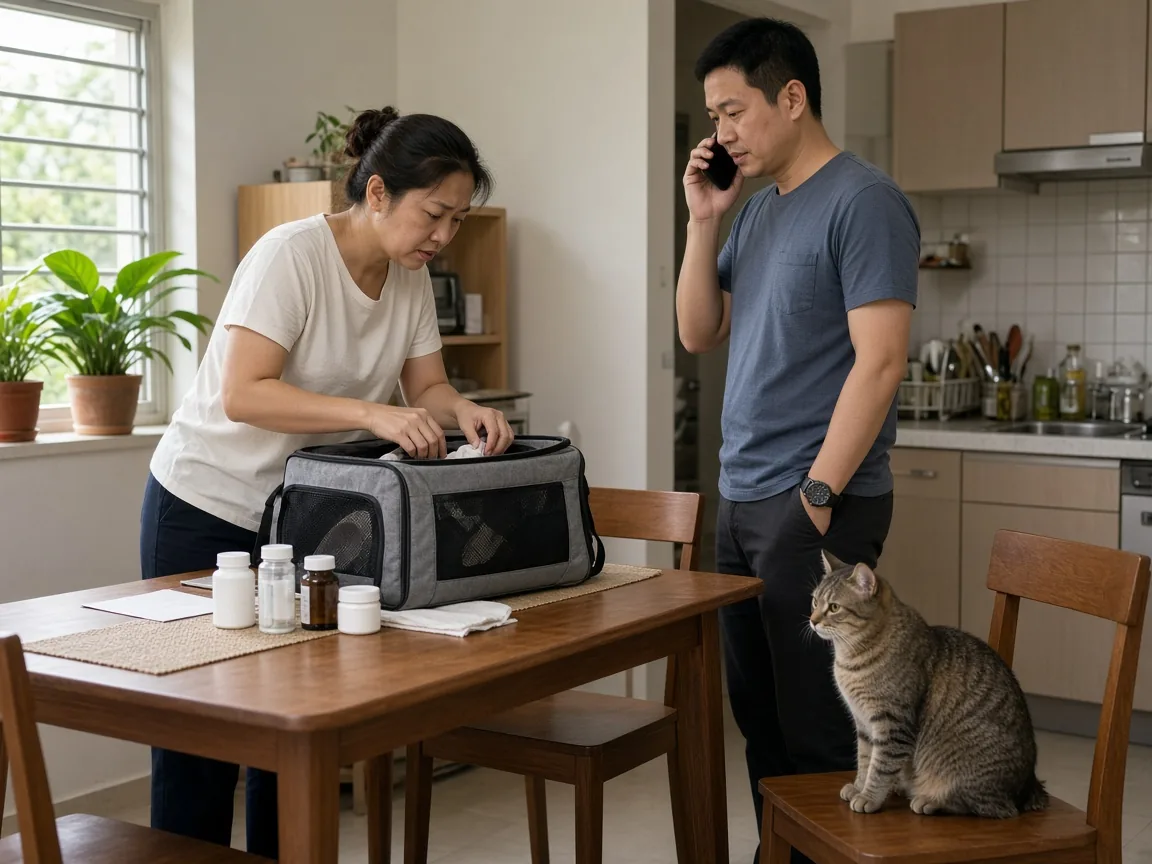
Once your pet arrives, a local vet can help with check-ups and the licence paperwork.
Bringing a dog or cat into Singapore takes some planning, and it is very doable if you start early. The Animal and Veterinary Service (AVS) sets the rules, and they depend on the country your pet is travelling from. We recommend keeping the AVS page on importing dogs and cats open as you plan, and using this article as a friendly map of it.
Rules, quarantine lengths and fees can change, so please confirm the details with AVS before you book. AVS also has a live chat on its website for import questions.
Step one: find your country’s category
AVS groups countries by rabies risk. As of AVS’s page updated on 21 September 2026:
- Schedule I (Australia, New Zealand, Ireland and the UK). No rabies vaccine or blood test is needed, and no quarantine if every condition is met.
- Schedule II (including the USA, Canada, Japan, Hong Kong and much of Europe). A rabies vaccine and blood test are needed. Quarantine is not needed if your pet arrives within 5 days of you and has lived with you at the same address for more than 6 months. Otherwise, plan for at least 10 days of home quarantine with a smart collar tag.
- Schedule III (every other country, including Malaysia and Indonesia). A rabies vaccine and blood test are needed, followed by at least 30 days at the Animal Quarantine Centre.
The rabies blood test is the long part
For Schedule II and III, the blood sample for the rabies antibody test must be taken at least 28 days after a valid rabies vaccination. It must also be taken at least 90 days, and no more than 12 months, before your pet leaves. The test has to be done at a WOAH reference laboratory or an approved lab in a Schedule I or II country. Put simply, start at least four months before you hope to fly.
The order AVS asks you to follow
- Check that the breed is allowed in Singapore and at your new home. HDB flats only accept approved breeds.
- Microchip your pet (ISO 11784/11785), then vaccinate. Make sure the chip number appears on every record.
- Keep core vaccinations up to date. For dogs that means distemper, adenovirus and parvovirus. For cats it means calicivirus, herpesvirus and panleukopenia.
- Book quarantine space when the blood test result is ready, if your category needs it.
- Get a dog or cat licence on PALS. AVS asks for this before the import licence.
- Apply for the import licence on GoBusiness. It costs $50 (or $100 express) and is valid for 90 days.
- Book the arrival inspection at least 5 days ahead, and check whether you need a Customs GST permit.
- Have your vet do parasite treatments and the health certificate 2 to 7 days before export, endorsed by the exporting country’s government vet.
Your new home’s rules still apply
An import licence lets your pet enter Singapore. It does not override HDB’s breed list or a condo by-law. We suggest checking the place you will actually live before you book a flight, so your pet can settle in smoothly after quarantine.
Once your pet arrives, a local vet can help with check-ups and the licence paperwork.